
2012 Bordeaux - November 19, 2025
The Wine Cellar Insider describes the 2012 Bordeaux vintage as "a year for vineyard managers and workers." The estates with the financial ability to take the necessary actions in the vineyards during the growing season, coupled with the willingness to severely declassify unripe grapes will produce the best wines. It was a difficult vintage with small quantities of wine. From start to finish, the growing season and 2012 Bordeaux harvest was stressful for the vintners, the vines and the winemakers.
The season followed a cold winter and wet spring, with April rains drenching the region. Then there were outbreaks of mildew that required spraying. May was warmer, then cooled down a bit again in June. All this brought on flowering that was late and uneven, resulting in small bunches with berries that ripened at different times, reducing quantities and necessitating serious work in the vineyards and intensive sorting at harvest. While a growing season is never over until it’s over, uneven flowering is never a good omen. The lateness in the flowering pushed the entire vintage back 2 to 3 weeks, depending on the chateaux. Generally speaking, late harvests are not usually harbingers of good things to come. After an average July, Bordeaux experienced a torrid heat spell and drought in August and September that stressed the vines, especially the young vines. The vines shut down and the vintage was on track to be even later than originally anticipated. Close to the end of September, things improved due to the much hoped for combination of warm days, cool nights and some desperately needed rain, nourishing the vines. The initial days of October offered reasonably warm temperatures during the day, coupled with cooler weather at night for vintners with Merlot ready to pick.
In the Medoc, it was hurry up and wait. Some estates began picking young Merlot in late September, but most held back until about October 1, with a few growers waiting another week or longer. Most producers brought all their fruit in by the middle of October. Pomerol is usually the first appellation to harvest, due to their Merlot dominated vines. Interestingly, picking was taking place simultaneously in the Left Bank on October 1. Numerous Pessac-Léognan properties began harvesting before Pomerol. Chateau Haut Brion began working on their young Merlot vines September 17 and Chateau Haut Bailly was not far behind, with a September 27 start date. Most chateaux were in the thick of things by October 4, although Domaine de Chevalier held off until October 8. Then massive amounts of rain dropped over the entire Bordeaux region. With accompanying temperatures in the mid to upper 60’s and higher in some areas, vintners were concerned about the potential of Botrytis, due to the humid, tropical conditions. At that point, the fruit needed to be picked, regardless of the state of maturity. Similar to what took place last year with the 2011 Bordeaux vintage, ripening was uneven. It was not just bunches that were not ripening, individual grapes in bunches achieved varying degrees of ripeness which made sorting more important than ever. Optical sorting was more widely used than ever with the 2012 Bordeaux harvest.
2012 Bordeaux could be a year where the dry, white Bordeaux wines shine. The berries were picked in September, under optimum conditions. Most producers were done harvesting the white wine grapes by September 25. The same cannot be said for the sweet wines of Sauternes and Barsac. This has been a difficult year for the development of Botrytis, due in part to the cold nights. With November closing in, most of the top estates were still nervously waiting to harvest. Generally speaking, low yields are usually a good thing. Low yields produce more concentrated wines. But when low yields are coupled with grapes that did not achieve full, phenolic ripeness, at the end of the day, the only thing vintners are primarily left with is less wine.
If the small quantities of wine available to sell are used as an excuse by owners as a reason to raise prices, grapes are not the only thing that will be in short supply. Customers for their wines will be in an even shorter supply than the wines. The early reports show lower alcohol levels for the wines than more recent, highly rated, expensive vintages. 2012 Bordeaux wine has the potential to be classic in style, which should please thirsty fans of traditional Bordeaux wine. While quantities are small, in many cases, it’s not much different than what the chateaux were able to produce in 2011. Many vintners are comparing the 2012 Bordeaux vintage a blend of 2002 and 2008.
Starters
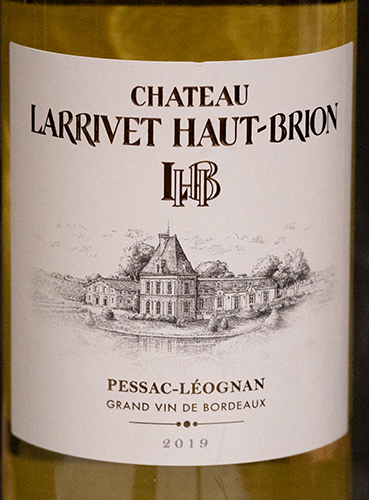
2019 Château Larrivet Haut-Brion (80% Sauvignon blanc, 20% Sémillon)
Red
Saint-Émilion
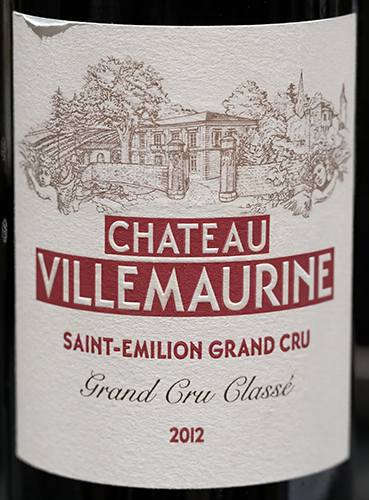
Château Villemaurine (95% Merlot, 5% Cabernet Franc)
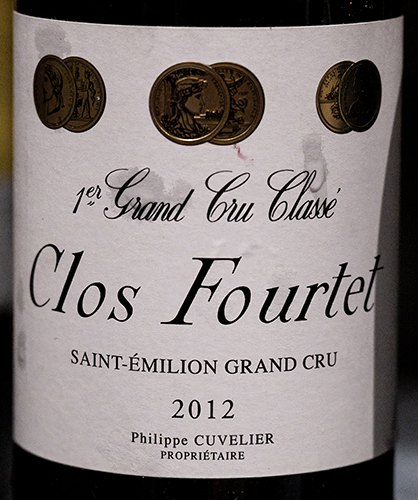
Château Clos Fourtet (10% Cabernet Sauvignon, 56% Merlot, 4% Cabernet Franc)
Saint Julien
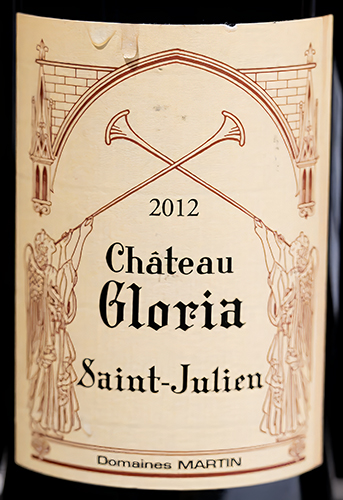
Château Gloria (66% Cabernet Sauvignon, 28% Merlot, 6% Petite Verdot)
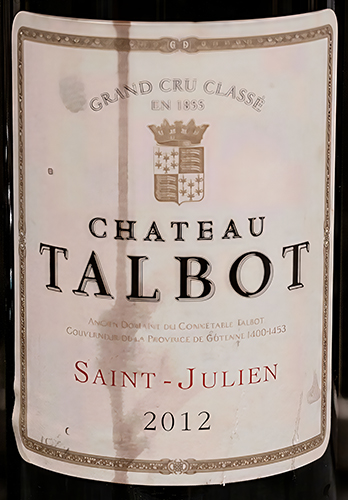
Château Talbot (59% Cabernet Sauvignon, 36% Merlot, 5% Petite Verdot)
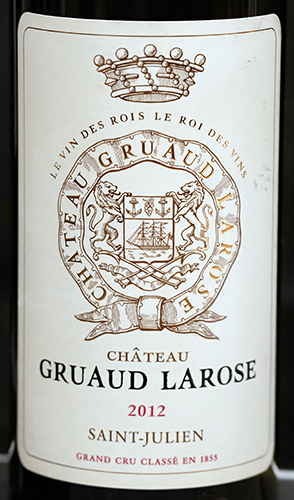
Château Gruaud Larose (67% Cabernet Sauvignon, 27% Merlot, 6% Petite Verdot)
Pauillac
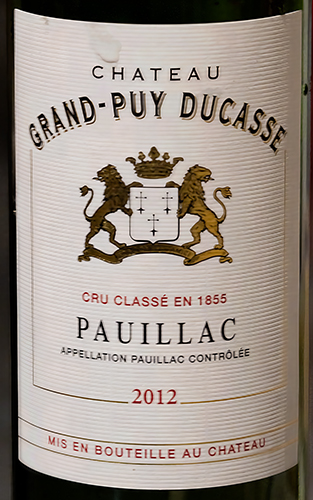
Château Grand Puy Ducasse (47% Cabernet Sauvignon, 43% Merlot)
Margaux
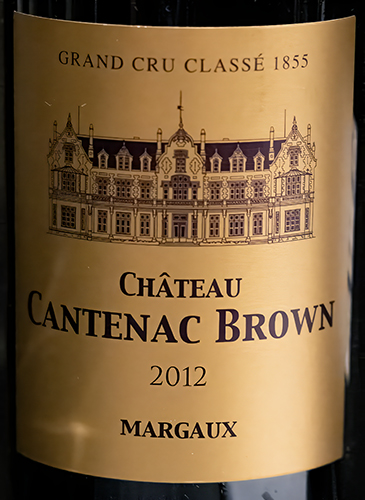
Château Cantenac Brown (65% Cabernet Sauvignon, 35% Merlot)
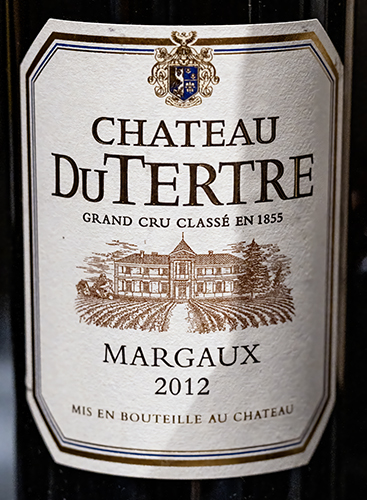
Château du Tertre (80% Cabernet Sauvignon, 15% Merlot, 5% Petite Verdot)
Pessac-Léognan
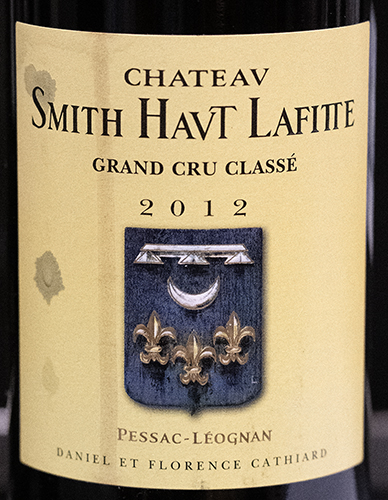
Château Smith Haut Lafite (55% Cabernet Sauvignon, 35% Merlot, 9% Cabernet Franc, 1% Petite Verdot)
Saint-Estèphe
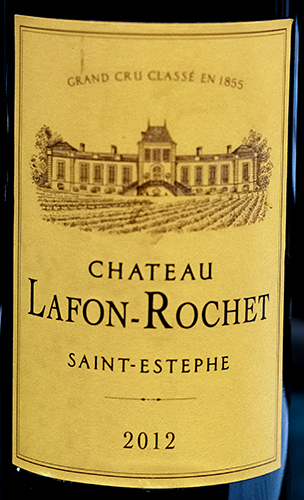
Château Lafon-Rochet (45% Cabernet Sauvignon, 40% Merlot, 5% Cabernet Franc)
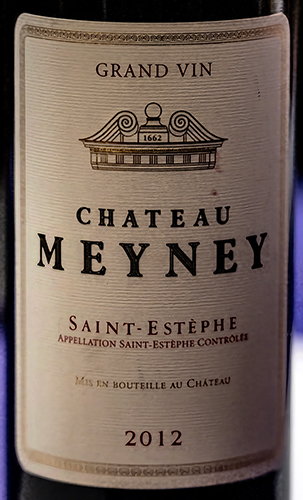
Château Meyney (70% Cabernet Sauvignon, 25% Merlot, 5% Petite Verdot and Cabernet Franc)
Pomerol
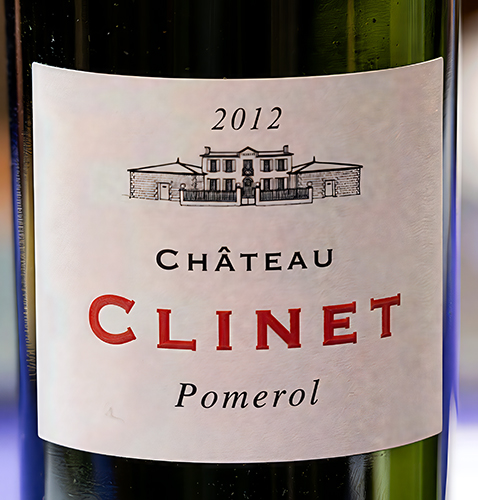
Château Clinet (90% Merlot, 9% Cabernet Sauvignon, 1% Cabernet Franc)
Dessert, Sauternes
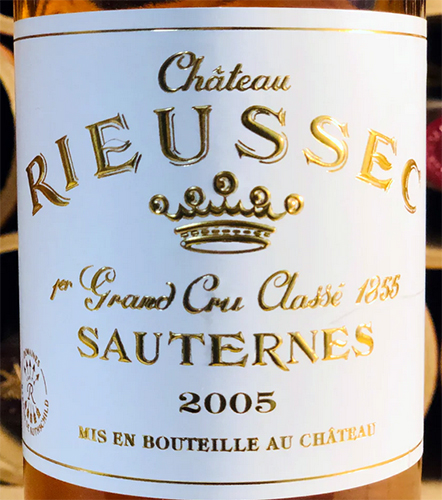
2005 Château Rieussec (90% Semillon, 8% Sauvignon Blanc and 2% Muscadelle)
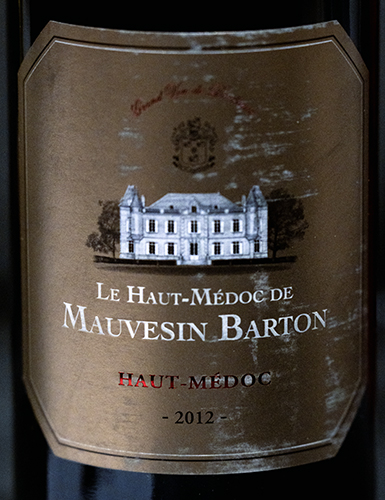
Images of Sampled Wines:
Page last updated: November 24, 2025 (EB)
Members: Please contact the webmaster for updates and changes to information contained in this web site.